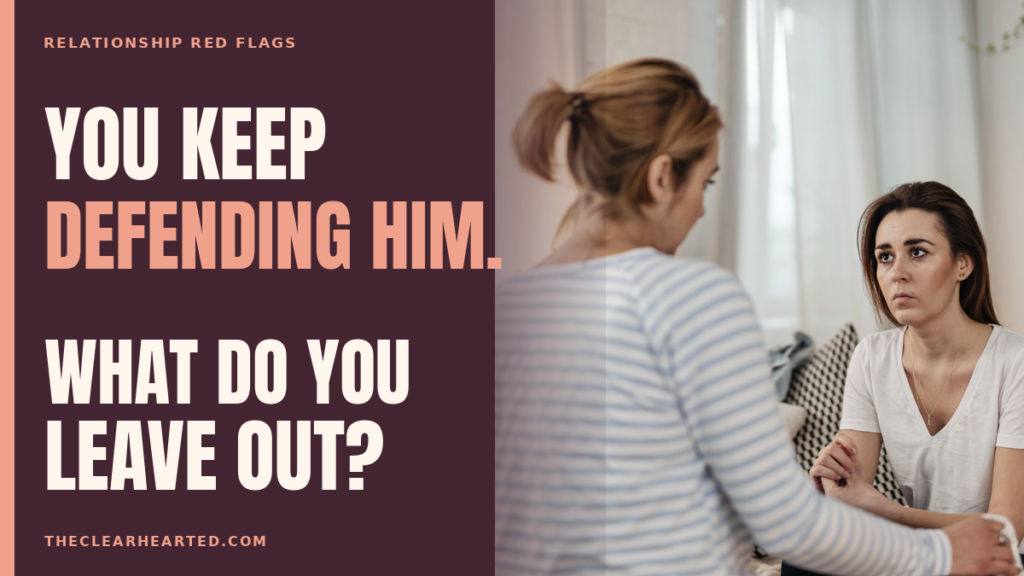
Your friend says, carefully, “I didn’t like the way he spoke to you last night.” Before she finishes, you’re explaining that he had a terrible week, that she missed the joke, that he apologized in the car.
Maybe all three are true. Maybe she also saw something you have had to explain several times before.
When your friends don’t like your boyfriend, the conversation can feel like a demand to defend your relationship. It doesn’t have to be a trial with sides. You can ask for specifics, consider their blind spots, and still take a hard look at what happens when nobody else is there.
First, separate a bad impression from a concerning pattern
Friends can be wrong. One awkward dinner, an introverted manner, a different sense of humor, or a conflict they walked into halfway through gives them an incomplete picture. They may also have expectations about a partner’s background, personality, or appearance that have nothing to do with how he treats you. You do not owe anyone a breakup because they dislike his style.
But closeness can make some patterns harder to see from inside. You have context for each sharp comment. Your friend sees that you stopped speaking after it. Neither view is the whole story; both may contain information.
Ask for a behavior, not a verdict. “He’s bad for you” is difficult to evaluate. “He corrected you three times at dinner, and you apologized each time” gives you an event you can examine. These four questions help you keep the decision in your hands.
1. What did they actually see?
Try: “Tell me the moment that worried you. What did he say or do, and what did you notice about me afterward?”
Listen before supplying missing context. Notice whether your friend describes a specific event or reaches straight for a character label. “He interrupted when you talked about your promotion and changed the subject to himself” is an observation. “He’s a narcissist” is a diagnosis your friend cannot establish from dinner.
Context can matter without erasing the event. If he interrupted because he misunderstood, how did he respond when you said you had not finished? If he snapped because he was stressed, did he repair it with you afterward? The most useful part of your friend’s account may be what happened next, not the first awkward sentence.
You can also ask another trusted person who was there what they noticed. Avoid turning the evening into a poll. You’re collecting descriptions so you can think clearly, not asking your friends to vote on your future.

2. Is it a one-off, or have you begun managing it?
Think about the last month rather than only that dinner. Do you brace yourself before introducing him to people? Do you steer conversation away from subjects that make him dismissive? Do you leave gatherings early to prevent an argument on the drive home?
These are concrete adjustments. Every couple makes some accommodations. The question is whether you have quietly made yourself responsible for preventing his reactions. If you are always editing your words and plans while he continues as usual, the cost deserves attention.
Write down three recent examples with dates if you can. For each, record what happened, what you did in response, and whether anything changed afterward. This can expose a pattern or show that an incident really was unusual. You need not make an immediate relationship decision to be honest with yourself about repetition.
Also notice whether the concern comes from one friend with an established conflict with him or from several people who noticed similar behavior independently. Agreement isn’t proof. It can, however, give you a reason to look more closely at the specific behavior they describe.
3. What do you leave out when you tell the story?
Perhaps you tell your friends he canceled dinner because work exploded, but leave out that you had prepared a meal and he did not tell you until you asked. Perhaps you describe a fight without mentioning the insult because you don’t want to hear their reaction.
Leaving something out does not mean you are dishonest. You may be protecting privacy, avoiding an unfair pile-on, or still deciding how you feel. The useful question is why a detail feels hard to say. Are you worried they’ll judge him, or worried they’ll recognize something you’ve been trying not to name?
Try telling the same event in full to yourself, on paper, without assigning a motive to either person. Include your words, his words, and what happened after. An apology matters; so does whether the same behavior returns. Affection afterward matters; so does whether you are free to bring the concern up again.
If the public version of him is generous and funny while your private experience leaves you feeling smaller, our piece on feeling small when everyone thinks he’s kind explores that gap. Your experience counts even when it is less visible to the people around you.

4. Do you feel free to disagree with him—and with your friends?
You can tell a friend, “I hear the concern. I want to think it through myself.” A supportive friend may disagree with your choice and still respect that you are making it. You can ask your boyfriend about a specific moment, too: “At dinner, you joked about my job after I said I didn’t like it. I want that to stop. Can we talk about it?”
What happens after each conversation tells you something. A partner who listens, takes responsibility, and changes a behavior gives you information. One who insists that you are imagining it, punishes you for speaking to friends, or pressures you to cut them off gives you different information. Likewise, a friend who controls your choices rather than sharing concern is not helping you think clearly.
You do not have to prove that anybody is entirely good or entirely bad. Ask whether you can express discomfort, keep friendships, and make ordinary decisions without paying for it later. Freedom to disagree is a useful measure because it shows up in real life, not just in a description of the relationship.
What to say when a friend brings it up again
You might say: “I don’t need a verdict today. I would like to know the exact behavior that concerned you. I’ll listen, and then I’ll decide what to do.” If you need time, add: “Please don’t bring it up every time we meet, but I do want you to tell me if you see something new.”
If your friend named a real incident, avoid promising that you will break up to end the conversation. That promise can make it harder to return to your friend later if you’re not ready to leave. Instead, say what you are actually going to do: ask him about the comment, notice whether it repeats, or take a few days to think.
If you believe their concern is based on prejudice or an inaccurate story, be direct about that, too. “I value you, but disliking his accent isn’t a relationship concern. If you notice how he treats me, I’m willing to hear that.” A useful conversation has to be fair to both of you.
If your support network is shrinking
Pay particular attention if you have begun canceling plans with friends because he gets angry, tracks your time, demands to read your messages, or makes seeing them exhausting. You might start choosing the path of least resistance long before anyone explicitly says you cannot see them.
You do not need to wait for a perfect label to seek support. The National Domestic Violence Hotline’s guidance for loved ones emphasizes staying connected and supporting the person’s choices. If you feel controlled or frightened, consider contacting a local support service or someone you trust using a device and time that feel safe. A confrontation is not required before you ask for help.
For a less urgent disagreement, keep one friendship separate from your relationship stress. Meet for coffee, talk about ordinary things, and let the friendship continue. A healthy relationship should leave room for your other relationships, even if the people in them do not always agree.
Frequently asked questions
What if my friends disliked him from the start?
Ask what their concern was then and whether it has changed with more information. Early discomfort may come from a real observation, a personality mismatch, or an unfair assumption. Give more weight to specific repeated conduct than to a first impression alone.
What if he dislikes my friends too?
Neither side has to become close. The question is whether he respects your ability to keep those friendships. Disagreeing about personalities is different from demanding that you stop seeing people who care about you.
Should I tell him everything my friends said?
You can discuss the behavior without naming a friend as the prosecutor. “That comment embarrassed me and I want to talk about it” is your own account. Consider your friend’s privacy and your safety before sharing what someone else told you.
How do I know whether to stay?
An article cannot decide that from a dinner story. Look at repeated behavior, your freedom to disagree, whether repair lasts, and how much of yourself you have been editing to make the relationship work. If fear or isolation is part of the picture, speak with a trusted person or specialist privately.
You can care about your boyfriend and still take your friend’s concern seriously. You can love your friends and still retain your own judgment. Start with what happened, what keeps happening, and whether you can say the full story aloud.
Clearhearted publishes general educational content about relationships. It is not therapy, counselling, or legal advice and cannot account for your specific situation. See our Disclaimer.

Conversation
Comments are closed.