
The school asks for an emergency contact. You write your name in the first box. Then you reach the second box and pause.
Your phone has plenty of people who would say, “Let me know if you ever need anything.” But who could leave work at 2:15, get to the school, show ID, and stay with your child until you arrive? That is a different question. A backup plan is built from specific, willing people and arrangements the school actually recognizes.
This is not a test of whether you have a perfect village. It is a way to make one bad Tuesday less dependent on your phone battery, your employer, and one person’s availability.
Start with jobs, not names
“Emergency contact” can mean several things. The school might need someone to answer a call if you cannot. It might need a person authorized to pick up your child. It might need medical information or a plan for a genuine crisis. Those are different jobs, and not every willing friend can do all of them.
On one sheet, write four situations: a late pickup, a sick day, an unexpected overnight problem, and an actual emergency. For each, ask what action would help most and how quickly it would need to happen. A neighbor who is usually home at 3 p.m. may be a good pickup backup. A friend across town may be better as a phone contact or the person who can bring groceries when a child is ill.
The American Academy of Pediatrics advises families to keep schools and teachers supplied with up-to-date contacts for people who can pick up and care for a child when a parent is unavailable. See its school emergency checklist. The useful part is not simply filling a blank on a form; it is checking that the person knows they are on it and can sometimes do the job.
Four texts to start building your backup plan
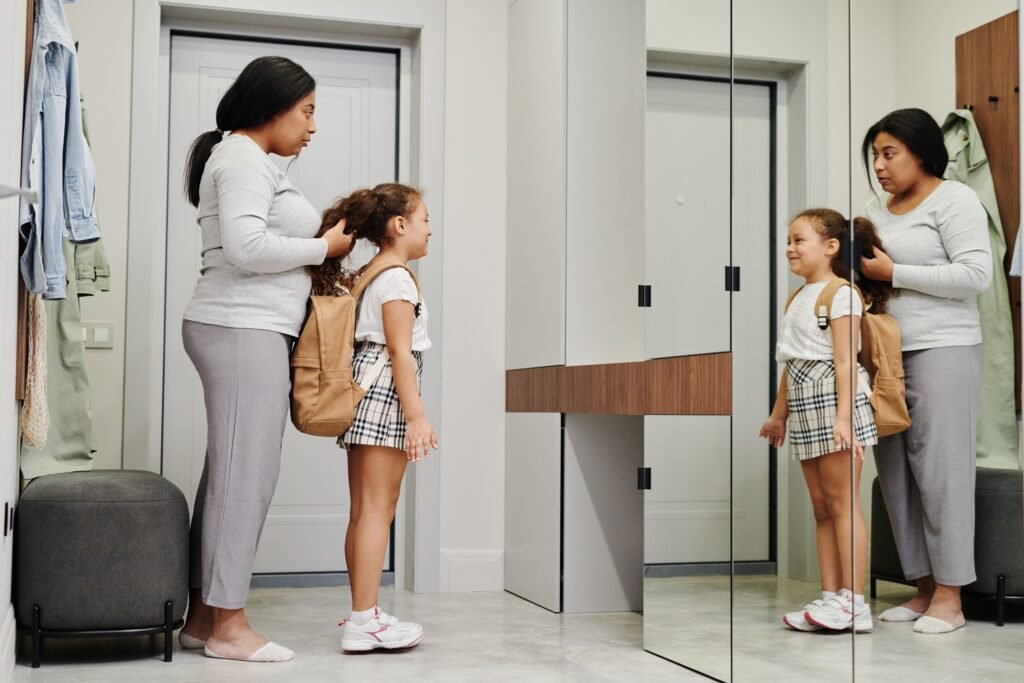
Photo: Tiger Lily / PexelsThese are invitations, not declarations that someone has been assigned a duty. Adapt the location, hours, and school rules to your situation.
Text 1: The school pickup ask
“Could I ask you about being an occasional backup for school pickup? It would only be if I got stuck at work and you were free. The school requires an approved name and ID. Would you be comfortable with that, or is it too hard with your schedule?”
The last sentence matters. It gives a friend a graceful no before an emergency happens. If they say yes, confirm which days and how much notice are realistic. Then check the school’s authorization procedure; a text between friends may not be enough for a school release.
Text 2: The ten-minute bridge
“If school calls when I’m in a meeting, could you be the person I text to phone the office and let them know I’m on my way? You wouldn’t need to pick up my child. Would that be a role you can do?”
Sometimes the needed help is communication, not transportation. Be precise about what information this person may share and when they should contact you again. Do not give someone authority the school or your arrangement does not allow; ask the office how it handles messages from backup contacts.
Text 3: The sick-day swap
“I’m trying to make a realistic sick-day plan. Could we talk about one afternoon a month when we might cover a short work call for each other? No pressure if that doesn’t fit your family.”
Reciprocity can help when two parents have uneven schedules, but it is not an entry fee for support. Do not promise hours you cannot provide. If you can help in another way—bringing food, doing a school run on Fridays, or lending a car seat—say so honestly. Be careful with contagious illness and each household’s comfort and health needs.
Text 4: The adult who checks on you
“I’m updating my backup plan. If I had a real emergency, would you be willing to be the person I call who could help me contact family or stay on the phone while I sort out the next step? I want to ask before I put your name anywhere.”
An adult support contact does not have to live close or be able to collect your child. Their role might be to help you think clearly, reach another authorized person, or make a call if you are overwhelmed. For an immediate medical or safety emergency, contact local emergency services and follow your child’s care plan; do not rely on a friend’s delayed text reply.
The missing part of most contact lists

Photo: Leeloo The First / PexelsA name saved in a phone is not a complete plan. For each person who agrees, check five practical details: What can they do? On which days or hours? How should they be reached? Does the school or childcare provider need a form or identification? What should happen if they do not answer?
Ask how long an arrangement lasts. Someone may be happy to help this semester and unavailable after a job change. Put a calendar reminder to revisit the plan when schedules change, not only at the start of the school year.
You also need a short information sheet somewhere secure and accessible to the relevant caregivers: the school’s number, your contact details, approved pickup people, key health information where appropriate, and any established care instructions. Share only what each person needs. For a child with a medical condition, work with the child’s clinician and school on the proper health and emergency plan. The AAP notes that school emergency information should include a child’s specific needs and be updated during the year.
If the only reliable person is you
Start with institutional questions rather than pretending there is a person you can nominate. Ask the school: “If I cannot answer for twenty minutes, what happens?” “What is your late-pickup policy?” “Can I list a contact who can speak with you even if they cannot collect my child?” Ask your workplace what flexibility exists for a school call. If your child attends an after-school program, learn its cutoff and backup options.
Depending on where you live, a community center, parent group, school social worker, or childcare provider may help you identify practical local resources. The point is to understand what is available before the stressful day. Do not put down a distant acquaintance as a pickup contact merely to fill the second box.
If co-parenting is part of your family, include the other parent where appropriate to your arrangement and your child’s safety. If there are restrictions or conflict, follow the applicable plan and seek qualified local advice. A generic contact list cannot resolve a legal or safety question.
Talk to your child without making them manage it
A school-age child can know the simple plan: “If I am late, stay with your teacher. The school will call me and then the adults on our approved list. You do not have to arrange the pickup.” Tell them who may collect them and what the school will do, using the school’s actual process.
Younger children need fewer details and more repetition. Older children may want to know how to reach you and which adults are safe to go with. Neither group should feel responsible for calling around to find you. Practice the plan calmly, as you would practice where to meet after a school event.
A 20-minute version you can do this week
First, call the school or childcare provider and ask exactly how backup contacts and pickup authorization work. Second, choose one person for one specific role, and send one of the texts above. Third, write down the next person or institution you will contact if they cannot do it. Fourth, update the school’s records only after the person agrees and you understand the rules.
That is a start, not a finished safety net. It is still better than the vague hope that someone will know what to do when the school calls. You are allowed to ask for help before you are in a crisis, and the people you ask are allowed to tell you what they can actually offer.
FAQ: Is an emergency contact the same as an authorized pickup person?
Often there are separate rules, and they vary by school or childcare provider. Ask the office which forms, identification, and permissions are required. Do not assume a name on one form grants every permission.
FAQ: What if the person says yes but never answers?
Make the plan layered. Set a reasonable time to try the first person, name the next step, and confirm the school’s own procedure if neither person answers. A backup contact should reduce uncertainty, not create a new single point of failure.
Clearhearted publishes general educational content. It is not therapy, counselling, medical, or legal advice and cannot account for your specific situation. See our Disclaimer.


Conversation
Comments are closed.