Your child mentions the holiday the way they always have: “We’ll do breakfast with you and Dad, then go to Grandma’s.” You know there will be two homes this year. They do not know what that means yet, and you have been hoping the calendar would give you a kinder way to say it.
If you are wondering how to explain the first holiday in two homes, the task is to give your child a plan they can picture. They do not need the negotiation that produced it. They do need to know which traditions are changing, what is staying, and whether they are allowed to miss the old version.
The American Academy of Pediatrics recommends being clear with children about changes in daily life and giving them repeated chances to ask questions. A holiday is one of those changes that can bring old questions back into the room.
Tell them before the invitation or the suitcase does
Do not wait until the night before a handoff if you already know the holiday plan. A little lead time gives a child room to ask whether they will see their cousins, where they will wake up, and what will happen to a favorite tradition. Too much lead time can leave a young child counting weeks they cannot quite understand. Choose a calm moment within a timeframe your child can use.
You might start: “This holiday will be different from last year. You’ll spend the morning here and the afternoon at Dad’s. You won’t have to decide where to go. The adults have made a plan, and I want to show it to you.”
If your arrangement is different, put the actual days into the sentence. “Friday night at Dad’s, Saturday morning here” is more useful than “we’re splitting the holiday.” Use a simple calendar for a child who likes to see the sequence. A teenager may prefer the details in a message so they can check them later.
Name the thing that will be missed
If you used to make pancakes together, do not pretend the breakfast was unimportant because it is easier to talk about presents. “We won’t all have breakfast at the same table this year. I know that may feel strange. I will miss parts of it too.”
Stop there long enough for a response. Your child may cry, shrug, ask about a toy, or say something that sounds disloyal to you. None of those is a score for how well you explained the schedule. Children can grieve one part of a day and look forward to another.
Avoid “At least you get two celebrations” as the first answer to sadness. It can be true and still miss the point. You can talk about what will be enjoyable after you have made room for what is different.
Put the plan on the calendar, including the handoff
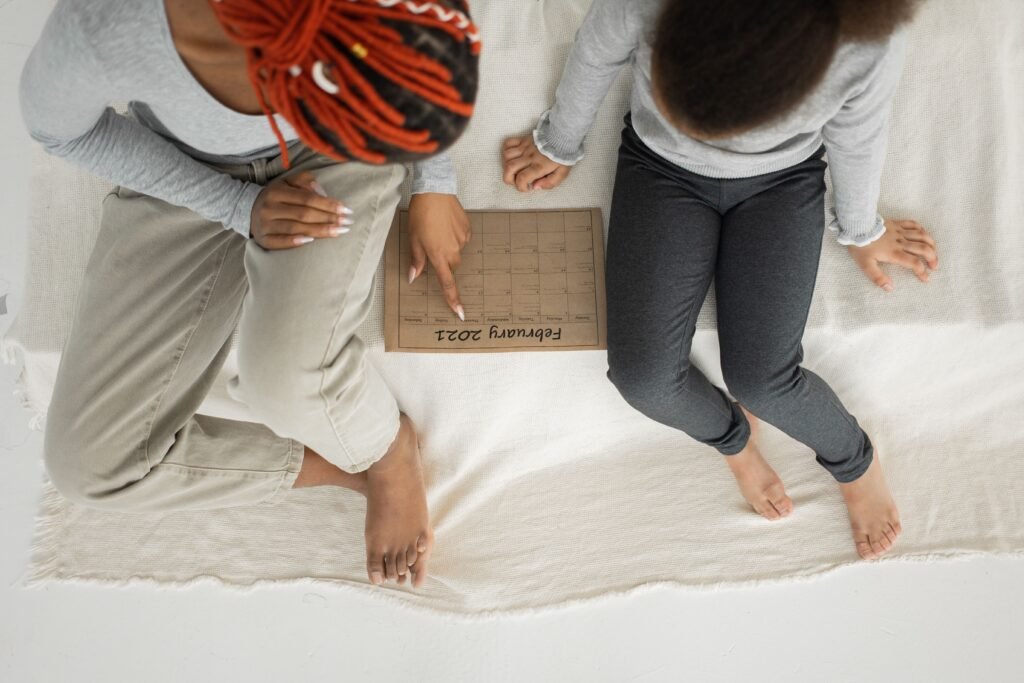
For a young child, a colored mark can show “sleep at Mom’s” and “sleep at Dad’s.” For an older child, add the pickup place, time, and any travel that affects their day. Include the return home, because “when do I see you again?” is often the most urgent question.
Try: “After lunch, Dad will pick you up from the usual place. You’ll have dinner there. I’ll see you Sunday morning. Your blue sweater and the book you chose can go in your bag.” It is fine if the plan feels mundane. Specific, mundane details make the day easier to imagine.
If plans are not settled, do not ask your child to help negotiate. “The adults are confirming the times. I know you’ll be with me on Friday. When I know Saturday’s plan, I’ll tell you.” Keep your next promise by updating them when you do know. If a change comes late, name it without a speech about which adult is at fault.
Give a tradition a new place without forcing a replacement
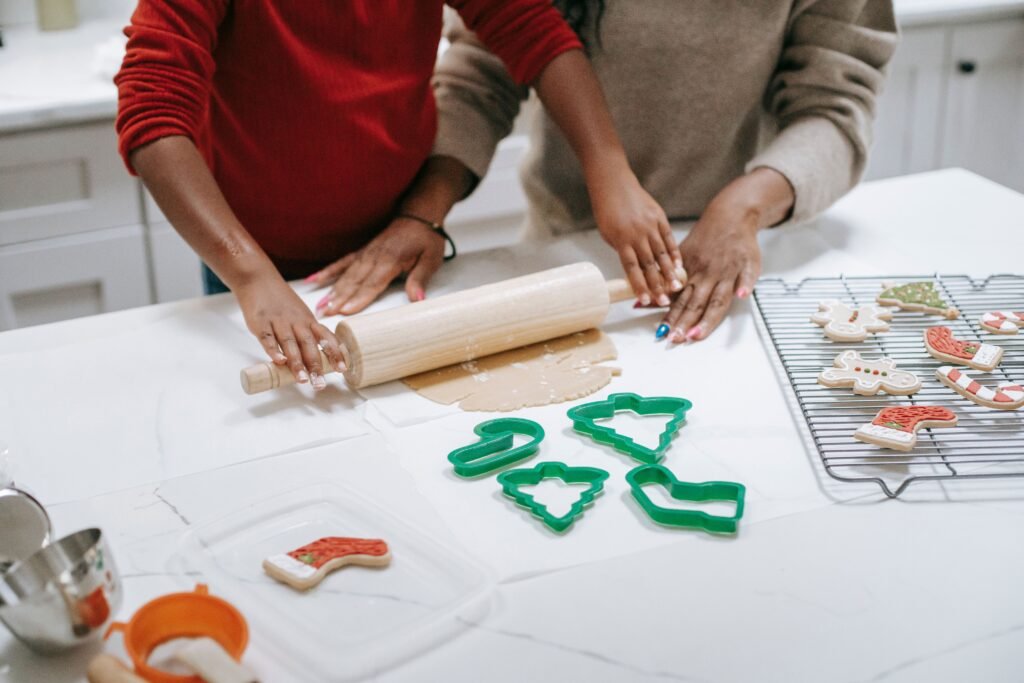
Ask which one or two pieces matter most: the same bedtime story, a particular dish, a call with a grandparent, or opening one small gift after breakfast. You may be able to keep the tradition at a different hour. “We can’t do our usual breakfast together, but we can make the pancakes on Saturday morning when you’re here.”
Do not sell the substitute as if it erases the loss. A child can enjoy Saturday pancakes and still wish for last year’s table. “We can do this new version and still miss the old one” is an honest invitation.
If the other home has its own traditions, your child is allowed to enjoy those too. A story about a wonderful time with Dad is not a review of your holiday. Child Mind Institute’s guidance on divorce and holidays warns against putting children in a loyalty bind or making celebrations a competition between parents.
What to say when your child wants everyone together
“I wish we could all be in one house like before.” You may want that too, or the idea may be impossible or unsafe. You do not need to pretend the adults will reunite for one meal to soften the day.
Try: “I hear that you want us together. We won’t celebrate in one home this year. You will have time with me, and the plan is for time with Dad too. It’s okay to feel disappointed.” Change that last sentence about Dad if time with him is not part of your actual plan. Do not offer a contact or reunion that has not been agreed or is unsafe.
If a calm, joint celebration truly works for your family, that is your decision. Do not arrange one because you feel a “good divorce” requires a family photo. Child Mind Institute’s guidance notes that joint festivities fit some low-conflict families and may be confusing or harmful where tension is high. A peaceful separate day can be kinder than a performative shared one.
Keep extended family out of the contest
Grandparents, aunts, and cousins may have strong opinions about who “gets” the special day. Your child should not be asked to justify a schedule, defend one parent, or rank which gathering is more fun.
You can tell relatives privately: “The schedule is set. Please don’t ask her to choose or tell her anyone is disappointed in her. We want her to enjoy the time she has with you.” If a relative cannot stop criticizing the other home, make the boundary clearer before the celebration rather than asking your child to tolerate it.
If a relative’s own holiday plans change, tell your child only what affects them. “Grandma will visit next weekend instead” is enough. You do not need to share the adult argument over dinner times.
Make the day after the holiday gentle too
The return can hold feelings that did not appear during the celebration: tiredness, a missed parent, a favorite object left in another home, or the ordinary letdown after a big day. You can plan a quiet meal and a familiar bedtime instead of filling every hour with a second celebration.
If your child comes home upset, give them a landing before asking for a report. Our guide to the first hour after a difficult return from Dad’s house offers a simple way to welcome them, let them settle, and listen without turning the handoff into an interrogation.
Notice your own plans as well. If your child will be elsewhere for part of the holiday, line up a person to call or a place to go if you want one. Your child’s holiday should not depend on them feeling responsible for your loneliness. Your feelings deserve adult support.
If the plan changes at the last minute
First, give your child the new facts: “The pickup time changed. You will still sleep here tonight. Tomorrow’s plan is now a visit after lunch.” If the change is genuinely uncertain, say what you know and when they will hear more.
Then handle the adult disagreement away from them. Avoid “Dad ruined everything” or “Tell Dad how upset you are,” even if you are angry. You can validate the child: “It makes sense to be disappointed. You were expecting a different morning.” If late changes are repeated, address the practical pattern through the appropriate adult channel or seek professional advice for your circumstances. A child cannot solve scheduling disputes.
If safety or a formal arrangement affects what you can do, follow the applicable plan and get individualized guidance. This article offers communication ideas, not instructions about parenting rights or legal schedules.
Questions you may still have
Should I ask my child which parent they want for the holiday?
Invite preferences about food, activities, or a tradition where you can. Do not give a young child the burden of deciding between parents. An older teen can be part of an age-appropriate discussion, but the adults remain responsible for the arrangement.
What if my child says your home is the boring one?
You can answer the feeling without competing: “It sounds like you had fun there. What would you like to do together when you’re here?” A quieter day can still be a good one.
What if we don’t know the holiday schedule yet?
Tell your child the confirmed pieces, keep the negotiation with adults, and set a specific time to update them. Avoid promising the version you hope will happen.
The first holiday in two homes does not have to prove that everyone has adjusted. Give your child a clear plan, permission to feel more than one thing, and the reassurance that the adults will handle the parts only adults can decide.
Clearhearted publishes general educational information about parenting and relationships. It is not individualized therapy, medical, safeguarding, or legal advice.