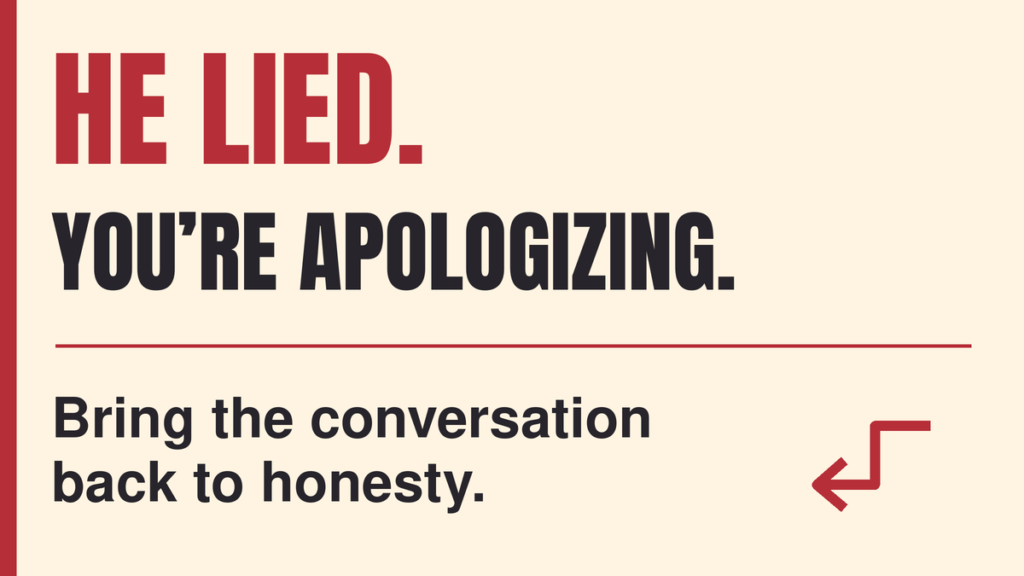
The moment that stays with you may be the laugh you heard across the room. He was leaning toward someone else, touching her arm, looking unmistakably interested. When you brought it up on the way home, he said you were insecure. Suddenly you were defending your feelings instead of talking about what happened.
If he flirts with other women in front of you, the most useful question is not whether a stranger would label it flirting. It is whether the two of you can discuss a specific behavior honestly and agree on boundaries that work for both of you. You are allowed to bring up what you saw without proving that you are the least jealous person alive.
Start with the event, not the label
“You flirted” can turn into a debate over the word. “At the party you put your hand on her waist, kept complimenting her appearance, and spent most of the evening alone with her” is harder to mishear. Describe only what you actually observed. Leave out guesses about what he wanted or what she thought.
There is room for different interpretations. Some people are naturally warm, and a friendly conversation is not automatically a betrayal. Your reaction still deserves a conversation. Ask yourself what bothered you most: the physical touch, the romantic tone, being left alone, the fact that he had agreed not to do this, or his response afterward. The answer tells you what boundary to discuss.
If you are unsure what you saw, you can say so: “I may have read that moment differently from you. I want to talk about the touching and the way I felt pushed aside.” You do not have to turn uncertainty into silence.

What to say when he calls you insecure
Keep your response short enough that you can remember it while upset:
“We can talk about whether I felt jealous. I also want to talk about
what happened at the party. Can we stay with that for a minute?”
That sentence leaves room for your feelings without accepting a change of subject. A second version is: “I am telling you which behavior hurt me. Calling me insecure does not answer what I said.” You are asking for a discussion, not a confession.
If he says, “So I can’t talk to anyone now?” correct the exaggeration once: “That isn’t what I’m asking. I’m talking about the flirting and the touching, not every conversation you have.” Then return to the concrete example. Repeating your case in six different ways often makes the argument longer without making it clearer.
Four ways to bring the conversation back
1. Name the moment. “When you put your arm around her and I was standing nearby, I felt uncomfortable.” That is more useful than “You always make me look stupid,” even when the larger pattern is what you are worried about.
2. Name the boundary. “I’m comfortable with you having friends and talking to people. I am not comfortable with romantic touching or suggestive comments at a party we’re attending together.” A boundary describes what you will and will not participate in; it does not require monitoring every interaction.
3. Ask what he heard. “What do you think I’m asking you to change?” If he repeats a caricature such as “You don’t want me near women,” you can clarify once. If he keeps repeating it after you clarify, that tells you something about whether the conversation is possible.
4. Ask for a future action. “Next time we’re out together, can we agree not to flirt with other people?” If the incident involved leaving you alone for the whole event, add, “And can we check in with each other during the evening?” A specific agreement is easier to observe than “I’ll do better.”
Notice that none of these steps requires you to establish the other person’s intentions. The relevant issue is how the two of you will treat one another at the next gathering.
Jealousy and a crossed boundary can coexist
You might have felt jealous. Jealousy is a feeling, not a verdict against you. It can point to an old wound, a present mismatch, or both. If you often fear betrayal despite consistently respectful behavior, that is worth exploring with curiosity. If he dismisses your feelings every time you name a concrete boundary, that is also worth noticing.
Try not to let the conversation become a trial about whether you are a “cool girlfriend.” You do not need to accept a form of flirting that hurts you to earn that title. Equally, you cannot make someone share your exact definition of flirting. You can find out whether your boundaries are compatible and whether he treats your concerns seriously.
Watch the response after the conversation

An encouraging response does not have to be perfect on the first try. He may disagree about what he intended and still say, “I see why that looked uncomfortable. Let’s talk about what we both mean by flirting.” He may ask what would help you feel included next time. Most importantly, he follows through when another chance appears.
A more concerning response shifts repeatedly from the event to your character: “You’re crazy,” “You’re embarrassing,” or “No normal woman would care.” He may demand that you apologize for asking while never addressing the touching, or agree in private and repeat the behavior in public. You cannot settle a pattern by finding a more elegant sentence.
The test is not whether he admits to a word he dislikes. It is whether a difficult conversation leads to a respectful agreement and observable change.
If the warmth you saw at the beginning disappeared the first time you set a boundary, He Was Charming Until You Said No looks more closely at that shift.
If it happens again
You can say, “We talked about this after the last party. I don’t want to keep attending events together under an agreement that disappears once we’re there.” Decide what you will do next: leave the event, stop going to those gatherings together, or reconsider the relationship if the pattern matters to you. Choose a step you can actually take, rather than a threat designed to win the argument.
If you feel pressured to drop friendships, change your clothes, or accept surveillance as the price of discussing his behavior, the issue has become larger than flirting. Talk it through with someone you trust. You are allowed to get perspective even when you have not decided what to do.
The question to take with you
You do not need a courtroom-quality case. You need a relationship where you can say, “This hurt,” and have the other person stay in the conversation. If he flirts with other women and then calls you insecure, focus on what happens when you ask for a clear boundary. His willingness to listen and act will tell you more than another hour spent debating the word flirt.
Quick questions
What if he says he is just friendly? Ask which specific behaviors he considers friendly and explain which ones feel romantic to you. Agreement matters more than winning a definition.
Should I confront the other woman? The commitment and the conversation are between you and him. Unless there is a separate reason to speak with her, begin there.
What if I cannot tell whether it was flirting? You can still discuss how the evening felt and what you would both prefer at future events.
Clearhearted publishes general educational relationship content. This article cannot assess your specific situation or replace professional support.